Search: cavalier/info-lgs@agrotis.it – Page 2

Need a new search?

If you didn't find what you were looking for, try a new search!

Pearl dilution

The Pearl dilution gene lightens the coat colour of the horse by diluting the red pigment. A chestnut basic colour is diluted to a pale, uniform apricot colour of body, mane and tail. Skin coloration is also pale. Pearl dilution is also referred to as the ‘Barlink Factor.’ The Coat Colour Pearl dilution test (P783) tests for the genetic status of the SLC45A2 gene. This gene has two variants (alleles). The allele Prl, causing the Pearl dilution is recessive. This means that only horses with two copies of the Prl allele have a lightened coat, mane and tail, in addition to bright eye colors. The dominant allele N does not have an effect on the basic coat colour.

Pearl dilution interacts with Cream dilution to produce pseudo-double dilute phenotypes including pale skin and blue/green eyes. Therefore if a horse has one copy of the Prl allele and Cream dilution (Cr allele) is also present, this results in a pseudo-double dilute, also called pseudo-cremellos or pseudo-smoky cream

A horse can also carry mutations for other modifying genes which can further affect its coat colour.

The Coat Colour Pearl dilution test encloses the following results, in this scheme the results of the Coat Colour Pearl dilution test are shown in combination with the possible results for the tests that determine the basic Coat Colour (Coat Colour Chestnut and Coat Colour Agouti test):

Result Pearl dilution

Result Chestnut + Agouti

Coat Colour

Description

N/N

e/e + A/A, A/a or a/a

Chestnut, Sorrel

Non-dilute. The basic colour chestnut/sorrel is not diluted unless modified by other colour modifying genes. It can only pass on allele N to its offspring.

N/N

E/E or E/e + A/A or A/a

Bay, Brown

Non-dilute. The basic colour bay/brown is not diluted unless modified by other colour modifying genes. It can only pass on allele N to its offspring

N/N

E/E or E/e + a/a

Black

Non-dilute. The basic colour black is not diluted unless modified by other colour modifying genes. It can only pass on allele N to its offspring

N/Prl

e/e + A/A, A/a or a/a


Chestnut, Sorrel

One copy of the recessive Prl allele. The basic colour chestnut/sorrel is not diluted unless modified by other colour modifying genes. If cream dilution is also present, this results in a pseudo-double dilute. It can pass on either allele N or Prl to its offspring.

N/Prl

E/E or E/e + A/A or A/a

Bay, Brown

One copy of the recessive Prl allele. The basic colour bay/brown is not diluted unless modified by other colour modifying genes. If cream dilution is also present, this results in a pseudo-double dilute. It can pass on either allele N or Prl to its offspring.

N/Prl

E/E or E/e + a/a

Black

One copy of the recessive Prl allele. The basic colour black not diluted unless modified by other colour modifying genes. If cream dilution is also present, this results in a pseudo-double dilute. It can pass on either allele N or Prl to its offspring.

Prl/Prl

e/e + A/A, A/a or a/a


Pearl dilution

Two copies of the recessive Prl allele. The basic colour chestnut/sorrel is diluted to a pale, uniform apricot colour of body hair, mane and tail. This colour can be further modified by other colour modifying genes. It can only pass on allele Prl to its offspring.

Prl/Prl

E/E or E/e + A/A or A/a

Pearl dilution

Two copies of the recessive Prl allele. The basic colour bay/brown is diluted to lightened coat, mane and tail. This colour can be further modified by other colour modifying genes. It can only pass on allele Prl to its offspring.

Prl/Prl

E/E or E/e + a/a

Pearl dilution

Two copies of the recessive Prl allele. The basic colour black is diluted to lightened coat, mane and tail. This colour can be further modified by other colour modifying genes. It can only pass on allele Prl to its offspring.

Silver dilution / MCOA

The Silver dilution gene dilutes the black pigment but has no effect on the red pigment. The effect of the Silver dilution gene can vary greatly. The mane and tail are lightened to flaxen or silver gray, and may darken on some horses as they age. A black horse will be diluted to chocolate with a lightened mane and tail. A Bay horse with Silver dilution will usually have a lightened mane and tail, as well as lightened lower legs (places with black pigment). A horse can also carry mutations for other modifying genes which can further affect its coat colour.

The Coat Colour Silver dilution test (P784) tests for the genetic status of the PMEL17 gene. This gene has two variants (alleles). The dominant allele Z results in the dilution and the recessive allele N does not have an effect on the basic colour.

The same mutation responsible for the coat color Silver is also associated with Multiple Congenital Ocular Anomalies (MCOA) Syndrome, a wide range of ocular defects that occur in the anterior and posterior parts of the eye. The severity of the syndrome is dose related, so horses with 1 copy of allele Z have fewer severe signs than those with 2 copies of allele Z.

The Coat Colour Silver dilution test encloses the following results, in this scheme the results of the Coat Colour Silver dilution test are shown in combination with the possible results for the tests that determine the basic Coat Colour (Coat Colour Chestnut and Coat Colour Agouti test):

Result Silver dilution

Result Chestnut + Agouti

Coat Colour

Description

N/N

e/e + A/A, A/a or a/a


Chestnut, Sorrel


Non-dilute. The basic colour chestnut/sorrel is not modified unless modified by other colour modifying genes. It can only pass on allele N to its offspring.

N/N

E/E or E/e + A/A or A/a

Bay, Brown

Non-dilute. The basic colour bay/brown is not modified unless modified by other colour modifying genes. It can only pass on allele N to its offspring.

N/N

E/E or E/e + a/a

Black

Non-dilute. The basic colour black is not modified unless modified by other colour modifying genes. It can only pass on allele N to its offspring.

N/Z

e/e + A/A, A/a or a/a


Chestnut, Sorrel


One copy of the dominant Z allele. The basic colour chestnut/sorrel is not modified unless modified by other colour modifying genes. It can pass on either allele N or Z to its offspring.

N/Z

E/E or E/e + A/A or A/a

Silver dilution on Bay or Brown

One copy of the dominant Z allele. The black pigment of bay/brown horses on lower legs is lightened and mane and tail are lightened to flaxen. The colour can be further modified by other colour modifying genes. It can pass on either allele N or Z to its offspring.

N/Z

E/E or E/e + a/a

Chocolate

One copy of the dominant Z allele. The basic colour black is diluted to chocolate with flaxen mane and tail. The colour can be further modified by other colour modifying genes. It can pass on either allele N or Z to its offspring.

Z/Z

e/e + A/A, A/a or a/a


Chestnut, Sorrel


Two copies of the dominant Z allele. The basic colour chestnut/sorrel is not modified unless modified by other colour modifying genes. It can only pass on allele Z to its offspring.

Z/Z

E/E or E/e + A/A or A/a

Silver dilution on Bay or Brown

Two copies of the dominant Z allele. The black pigment of bay/brown horses on lower legs is lightened and mane and tail are lightened to flaxen. The colour can be further modified by other colour modifying genes. It can only pass on allele Z to its offspring.

Z/Z

E/E or E/e + a/a

Chocolate

Two copies of the dominant Z allele. The basic colour black is diluted to chocolate with flaxen mane and tail. The colour can be further modified by other colour modifying genes. It can only pass on allele Z to its offspring.

Splashed White 3

Splashed white is a variable white spotting pattern characterized by a large blaze, extended white markings on legs, variable white spotting on belly, pink skin and often blue eyes. In other cases, the unpigmented areas are quite small and cannot be distinguished from horses with other more subtle depigmentation phenotypes. Splashed white horses are sometimes deaf, however most splashed white horses are not deaf. Hearing loss is due to the death of the necessary hair cells, caused by the absence of melanocytes in the inner ear. Although the majority of splash horses have pigment around the outside of the ear, the pigment must occur in the inner ear to prevent hearing loss. There are several different mutations identified that are associated with splashed white patterns. The Coat White Spotting 3 test (P514) tests for the mutation known as SW3 in the MITF gene. This test detects two variants (alleles). The allele SW3 is dominant. One or two copies of the SW3 allele result in splashed white. It is speculated that two copies of the SW3 allele are lethal (the foal dies). The allele N is recessive and does not have an effect on the basic colour.

The Coat Colour White Spotting 3 test encloses the following results, in this scheme the results of the Coat Colour White Spotting 3 test are shown in combination with the possible results for the tests that determine the basic Coat Colour (Coat Colour Chestnut and Coat Colour Agouti test):

Result White Spotting 3

Result Chestnut + Agouti

Coat Colour

Description

N/N

e/e + A/A, A/a or a/a


Chestnut, Sorrel


Not Splashed White. The basic colour chestnut/sorrel is not modified unless modified by other colour modifying genes. It can only pass on allele N to its offspring.

N/N

E/E or E/e + A/A or A/a

Bay, Brown

Not Splashed White The basic colour bay/brown is not modified unless modified by other colour modifying genes. It can only pass on allele N to its offspring.

N/N

E/E or E/e + a/a

Black

Not Splashed White. The basic colour black is not modified unless modified by other colour modifying genes. It can only pass on allele N to its offspring.

N/SW3

e/e + A/A, A/a or a/a


Chestnut/sorrel with Splashed White pattern

Splashed White pattern. One copy of the SW3 allele. The horse will display some degree of white spotting but the specific pattern cannot be predicted, unless modified by other colour modifying genes. It can pass on either allele N or SW3 to its offspring.

N/SW3

E/E or E/e + A/A or A/a

Brown/bay with Splashed White pattern

Splashed White pattern. One copy of the SW3 allele. The horse will display some degree of white spotting but the specific pattern cannot be predicted, unless modified by other colour modifying genes. It can pass on either allele N or SW3 to its offspring.

N/SW3

E/E or E/e + a/a

Black with Splashed White pattern

Splashed White pattern. One copy of the SW3 allele. The horse will display some degree of white spotting but the specific pattern cannot be predicted, unless modified by other colour modifying genes. It can pass on either allele N or SW3 to its offspring.

SW3/SW3

e/e + A/A, A/a or a/a

Chestnut/sorrel with Splashed White pattern

Splashed White pattern. Two copies of the SW3 allele. The horse will display some degree of white spotting but the specific pattern cannot be predicted, unless modified by other colour modifying genes. It can only pass on allele SW3 to its offspring.

SW3/SW3

E/E or E/e + A/A or A/a

Brown/bay with Splashed White pattern

Splashed White pattern. Two copies of the SW3 allele. The horse will display some degree of white spotting but the specific pattern cannot be predicted, unless modified by other colour modifying genes. It can only pass on allele SW3 to its offspring.

SW3/SW3

E/E or E/e + a/a

Black with Splashed White pattern

Splashed White pattern. Two copies of the SW3 allele. The horse will display some degree of white spotting but the specific pattern cannot be predicted, unless modified by other colour modifying genes. It can only pass on allele SW3 to its offspring.

Degenerative Myelopathy Exon 2 (DM Exon 2)

Canine Degenerative Myelopathy (DM) is an incurable progressive neurodegenerative disease of the spinal cord. Neurodegenerative diseases are characterised by progressive loss of neurons in the central nervous system (CNS) which leads to deficiencies in function. In the case of DM, the affected region is the spinal cord, which results in ataxia (a loss of coordination). DM is similar in many ways to Amyotrophic Lateral Sclerosis (ALS) in humans.

This variant of the disease, sometimes designated as SOD1A or as Degenerative Myelopathy Exon 2, occurs in many different breeds. It is caused by an autosomal recessive with incomplete penetrance mutation to the gene SOD1. Although the mutation is found in many breeds, the disease is rarely diagnosed in breeds or in mixed-breed dogs other than those mentioned for this test. A related variant specific to the Bernese Mountain Dog has also been observed. When testing a Bernese Mountain Dog for DM, it is important to test for both of these variants, as opposed to only one.

For DM in Pembroke Welsh Corgis there are also multiple Degenerative Myelopathy Risk Modifiers (DMRM) descibed in literature. These SP110 mutations are available for testing in a different package.

Splashed White 1

Splashed white is a variable white spotting pattern characterized by a large blaze, extended white markings on legs, variable white spotting on belly, pink skin and often blue eyes. In other cases, the unpigmented areas are quite small and cannot be distinguished from horses with other more subtle depigmentation phenotypes. Splashed white horses are sometimes deaf, however most splashed white horses are not deaf. Hearing loss is due to the death of the necessary hair cells, caused by the absence of melanocytes in the inner ear. Although the majority of splash horses have pigment around the outside of the ear, the pigment must occur in the inner ear to prevent hearing loss. There are several different mutations identified that are associated with splashed white patterns. The Coat White Spotting 1 test (P512) tests for the mutation known as SW1 in the MITF gene. This test detects two variants (alleles). The allele SW1 is dominant. One or two copies of the SW1 allele result in splashed white. The allele N is recessive and does not have an effect on the basic colour.

The Coat Colour White Spotting 1 test encloses the following results, in this scheme the results of the Coat Colour White Spotting 1 test are shown in combination with the possible results for the tests that determine the basic Coat Colour (Coat Colour Chestnut and Coat Colour Agouti test):

Result White Spotting 1

Result Chestnut + Agouti

Coat Colour

Description

N/N

e/e + A/A, A/a or a/a


Chestnut, Sorrel


Not Splashed White. The basic colour chestnut/sorrel is not modified unless modified by other colour modifying genes. It can only pass on allele N to its offspring.

N/N

E/E or E/e + A/A or A/a

Bay, Brown

Not Splashed White The basic colour bay/brown is not modified unless modified by other colour modifying genes. It can only pass on allele N to its offspring.

N/N

E/E or E/e + a/a

Black

Not Splashed White. The basic colour black is not modified unless modified by other colour modifying genes. It can only pass on allele N to its offspring.

N/SW1

e/e + A/A, A/a or a/a


Chestnut/sorrel with Splashed White pattern

Splashed White pattern. One copy of the SW1 allele. The horse will display some degree of white spotting but the specific pattern cannot be predicted, unless modified by other colour modifying genes. It can pass on either allele N or SW1 to its offspring.

N/SW1

E/E or E/e + A/A or A/a

Brown/bay with Splashed White pattern

Splashed White pattern. One copy of the SW1 allele. The horse will display some degree of white spotting but the specific pattern cannot be predicted, unless modified by other colour modifying genes. It can pass on either allele N or SW1 to its offspring.

N/SW1

E/E or E/e + a/a

Black with Splashed White pattern

Splashed White pattern. One copy of the SW1 allele. The horse will display some degree of white spotting but the specific pattern cannot be predicted, unless modified by other colour modifying genes. It can pass on either allele N or SW1 to its offspring.

SW1/SW1

e/e + A/A, A/a or a/a

Chestnut/sorrel with Splashed White pattern

Splashed White pattern. Two copies of the SW1 allele. The horse will display some degree of white spotting but the specific pattern cannot be predicted, unless modified by other colour modifying genes. It can only pass on allele SW1 to its offspring.

SW1/SW1

E/E or E/e + A/A or A/a

Brown/bay with Splashed White pattern

Splashed White pattern. Two copies of the SW1 allele. The horse will display some degree of white spotting but the specific pattern cannot be predicted, unless modified by other colour modifying genes. It can only pass on allele SW1 to its offspring.

SW1/SW1

E/E or E/e + a/a

Black with Splashed White pattern

Splashed White pattern. Two copies of the SW1 allele. The horse will display some degree of white spotting but the specific pattern cannot be predicted, unless modified by other colour modifying genes. It can only pass on allele SW1 to its offspring.

Appaloosa Pattern-1 (PATN1)

The Appaloosa spotting pattern, also known as Leopard Complex spotting (LP) includes a highly variable group of white spotting- or depigmentation patterns in horses. Appaloosa horses have three additional identifiable characteristics: mottled skin around the muzzle, anus and genitalia, striped hooves and white sclera round the eyes. LP is the result of an incompletely dominant mutation in the TRPM1 gene, also known as the LP gene. The LP gene allows for the expression of the various leopard complex spotting patterns while other genes determine the extent (or amount) of white. One of the genes that is associated with increased amount of white in in LP horses has been identified (RFWD3) and has been termed Pattern-1 (PATN1) for first pattern gene. The Coat Colour Appaloosa Pattern-1 (PATN1) test (P305) tests for the status of the PATN1 gene. This gene has two variants (alleles). The dominant allele PATN1 results in an increased amount of white in horses that carry at least one copy of the LP allele on the LP gene. The recessive allele N does not have an effect on the basic colour. Horses that have one copy of the LP allele, in combination with at least one copy of the PATN1 allele most often have a Leopard or a near Leopard pattern. Horses that have two copies of the LP allele in combination with at least one copy of the PATN1 allele most often have a Few-spot or near Few spot pattern. Horses that have at least one copy of the  PATN1 allele but do not have a copy of the LP allele will not have a Appaloosa spotting pattern but can pass on the PATN1 allele to their offspring.

The Coat Colour Appaloosa Pattern-1 (PATN1) test encloses the following results, in this scheme the results of the Coat Colour Appaloosa Pattern-1 (PATN1) test are shown in combination with the possible results for the LP Gene.

Result PATN1

Result LP

Coat Colour

Description

N/N

N/N

No Appaloosa

The basic colour is not modified unless modified by other colour modifying genes. It can only pass on allele N to its offspring.

N/N

N/LP

Blanket appaloosa

It can only pass on allele N to its offspring.

N/N

LP/LP

Snow cap appaloosa

It can only pass on allele N to its offspring. The horse suffers from Congenital Stationary Night Blindness (CSNB).

N/PATN1

N/N

No Appaloosa

The basic colour is not modified unless modified by other colour modifying genes. It can pass on either allele N or PATN1 to its offspring.

N/PATN1

N/LP

Leopard or a near Leopard pattern

It can pass on either allele N or PATN1 to its offspring.

N/PATN1

LP/LP

Few-spot or near Few spot pattern.

It can pass on either allele N or PATN1 to its offspring. The horse suffers from Congenital Stationary Night Blindness (CSNB).

PATN1/PATN1

N/N

No Appaloosa

The basic colour is not modified unless modified by other colour modifying genes. It can only pass on allele PATN1 to its offspring.

PATN1/PATN1

N/LP

Leopard or a near Leopard pattern

It can only pass on allele PATN1 to its offspring.

PATN1/PATN1

LP/LP

Few-spot or near Few spot pattern

It can only pass on allele PATN1 to its offspring. The horse suffers from Congenital Stationary Night Blindness (CSNB).

CSNB / Leopard Spotting

The Appaloosa spotting pattern, also known as Leopard Complex spotting (LP) includes a highly variable group of white spotting- or depigmentation patterns in horses. Appaloosa horses have three additional identifiable characteristics: mottled skin around the muzzle, anus and genitalia, striped hooves and white sclera round the eyes. The Appaloosa pattern is the result of an incompletely dominant mutation in the TRPM1 gene, also known as the LP gene. The LP gene allows for the expression of the various leopard complex spotting patterns while other genes determine the extent (or amount) of white. The CSNB / Leopard Spotting test (P311) tests for the status of the LP (TRPM1) gene. This gene has two variants (alleles). The allele LP is incomplete-dominant and expression of the Appaloosa pattern is variable, ranging from absent to extremely white patterning. At least one copy of the LP allele allows the expression of the Appaloosa pattern. The amount of white present is not dosage related, horses with two copies of the LP allele can have minimal expression of white patterning. The recessive allele N does not have an effect on the basic colour. The variability in the amount of white on Appaloosa-coloured horses is controlled by other genes, one of which is PATN1. Horses that have one copy of the LP allele, in combination with at least one copy of the PATN1 allele most often have a Leopard or a near Leopard pattern. Horses that have two copies of the LP allele in combination with at least one copy of the PATN1 allele most often have a Few-spot or near Few spot pattern. Horses that have two copies of the LP allele suffer from Congenital Stationary Night Blindness (CSNB), which is the inability to see in low to no-light conditions.

The CSNB / Leopard Spotting test encloses the following results, in this scheme the results of the CSNB / Leopard Spotting test are shown in combination with the possible results for the Coat Colour Appaloosa Pattern-1 (PATN1) test.

Result LP

Result PATN1

Coat Colour

Description

N/N

N/N

No Appaloosa

The basic colour is not modified unless modified by other colour modifying genes. It can only pass on allele N to its offspring.

N/LP

N/N

Blanket appaloosa

It can pass on either allele N or LP to its offspring.

LP/LP

N/N

Snow cap appaloosa

It can only pass on allele LP to its offspring. The horse suffers from Congenital Stationary Night Blindness (CSNB)

N/N

N/PATN1

No Appaloosa

The basic colour is not modified unless modified by other colour modifying genes. It can only pass on allele N to its offspring..

N/LP

N/PATN1

Leopard or a near Leopard pattern

It can pass on either allele N or LP to its offspring.

LP/LP

N/PATN1

Few-spot or near Few spot pattern.

It can only pass on allele LP to its offspring. The horse suffers from Congenital Stationary Night Blindness (CSNB)

N/N

PATN1/PATN1

No Appaloosa

The basic colour is not modified unless modified by other colour modifying genes. It can only pass on allele N to its offspring.

N/LP

PATN1/PATN1

Leopard or a near Leopard pattern

It can pass on either allele N or LP to its offspring.

LP/LP

PATN1/PATN1

Few-spot or near Few spot pattern

It can only pass on allele LP to its offspring. The horse suffers from Congenital Stationary Night Blindness (CSNB)

Degenerative Myelopathy Exon 2 (DM Exon 2) (External Patent Lab)

Canine Degenerative Myelopathy (DM) is an incurable progressive neurodegenerative disease of the spinal cord. Neurodegenerative diseases are characterised by progressive loss of neurons in the central nervous system (CNS) which leads to deficiencies in function. In the case of DM, the affected region is the spinal cord, which results in ataxia (a loss of coordination). DM is similar in many ways to Amyotrophic Lateral Sclerosis (ALS) in humans.

This variant of the disease, sometimes designated as SOD1A or as Degenerative Myelopathy Exon 2, occurs in many different breeds. It is probely caused by an autosomal recessive mutation with incomplete penetrance to the gene SOD1. The variant is found in many breeds, but the disease is rarely diagnosed in breeds or in mixed-breed dogs other than those mentioned for this test.

For DM in Pembroke Welsh Corgis there are also multiple Degenerative Myelopathy Risk Modifiers (DMRM) descibed in literature. These SP110 mutations are available for testing in a different package.

Useful information about DNA-profiles

The DNA-profile of one individual is identical in each part of the body. It does not make a difference in a comparison if a DNA-profile of an individual is based on hairs, blood, swabs, semen or tissue.

 Because large variation is present in the DNA, it is almost not possible that two randomly selected individuals have identical DNA-profiles. Each individual will have his or her own DNA, which will differ on one or more points from other individuals. One exception on this are identical twins or clones, which have completely identical DNA patterns.

Xanthinuria, type 2 – Manchester Terrier

Xanthinuria is a metabolic disorder that causes an excess of xanthine in the urine, which leads to the formation of urinary stones and related complications. Type II xanthinuria is caused by a recessive mutation to the gene MOCOS. The variant of the disorder analysed in this test is found in the Manchester Terrier. Related variants have also been observed in the Cavalier King Charles Spaniel and in the Dachshund.

Xanthinuria type 2 – Dachshund

Xanthinuria is a metabolic disorder that causes an excess of xanthine in the urine, which leads to the formation of urinary stones and related complications. Type II Xanthinuria is caused by a recessive mutation to the gene MOCOS. The variant analysed in this test is found in the Dachshund. Closely related variants occur in the Cavalier King Charles Spaniel and Manchester Terrier.

Copper Toxicosis (Accumulating Variant, ATP7B-related)

This test is for a mutation on the ATP7B gene. The ATP7B gene is associated with an increased risk of developing copper toxicosis in several dog breeds. Copper toxicosis is sometimes also called Wilson Disease. In Labrador Retrievers the ATP7B gene interacts with two other genes, ATP7A and RETN. A mutation in ATP7A has been found to be protective, and in one study, carrying one or two copies of a mutation in RETN was associated with lower copper values in the liver in Labradors. Follow-up studies have not replicated these findings, so the RETN variant may be neutral rather than protective. In Labradors and related breeds we recommend testing the three variants together.

Macrothrombocytopenia (MTC) – Cairn and Norfolk Terrier

Thrombocytopenia or macrothrombocytopenia (MTC) is a hereditary disorder that is characterized by a reduced number of blood platelets (thrombocytes). Many of the remaining thrombocytes are enlarged. Thrombocytes play an important role in the clotting of blood (a.k.a. coagulation). There are two mutations identified in the ß1-tubulin (TUBB1) gene to cause a reduction in thrombocytes. Depending on the variant, symptoms may range from prolonged bleeding times to an apparently healthy animal.

The variant in this test of the disorder is found in the Norfolk Terrier and Cairn Terrier, and is caused by a recessive mutation to the gene TUBB1. A related version occurs in the Cavalier King Charles Spaniel.

SynchroGait (DMRT3-related)

All horses have three naturally occurring gaits (walk, trot and gallop). Some breeds (the gaited breeds) exhibit one or more additional gaits, particularly at intermediate speeds. This ability to exhibit alternate forms of gait is called gaitedness and the DNA test for this trait is known as SynchroGait. A mutation is found in the doublesex and mab-3 related transcription factor 3 (DMRT3) gene. This gene plays a crucial role in the development of the spinal cord neurons that control limb movement and locomotion. Specifically, the gene is involved in the formation of inhibitory interneurons in the spinal cord, which are critical for coordinating muscle movements during various gaits. The mutation is seen as a major genetic factor and is seen in many horse breeds.

Introduction to Genetics

History

Since the 19th century experiments have been conducted on the heredity of various organisms. The heredity was determined by observations of organisms – that the next generation gets one copy from each factor from each parent, and subsequently passing the factor on to following generations (Durmaz et al., 2015). The factors include for example colour, height, or shape of the organism. Pioneers Gregor Mendel and Augustinian Friar were scientist studying genetics scientifically. Gregor Mendel performed breeding experiments with hybridizing pea plants, in which different traits were traced. The traits included colour of the plants and round or wrinkled peas. The pioneer, after reporting the first breeding experiments, died in 1884. Little did he know that he would end up in biology textbooks.

Astounding results were observed by Mendel, the scientist saw traits were independently transmitted from each other (Dijk, Weissing, & Ellis, 2018). The independent transmission of traits is based on the position of genes on the corresponding chromosome. The progeny receives half of the chromosomes of both parents. If the gene is positioned on a chromosome – which is not passed down the lineage – the progeny does not express the gene. Therefore, if an experiment is conducted on various traits encoded by the corresponding genes. The progeny expresses different variation of traits in contrast to the parents.

Although, Mendel started the experiments on heredity of organisms. The scientist did not introduce the words “genetics” or “gene”. Later in the 20th, the scientific community century begun to focus on more breeding related experiments, and thereby referring to the results indicated by Mendel. The heredity of organisms would be called “genetics” and the factor that expresses the trait of a species was described as “gene” (Portin, Wilkins, 2017). It was the start of a new discipline in the scientific community.

Introduction to genetics

The introduction of the study genetics leaded to genetic research on a more molecular level. The molecular level experiments were more focussed on the structure and biosynthetic pathways that are needed to express a certain trait. In the first stages of genetic research on various structures and biosynthetic pathways, scientists suggested corresponding proteins were responsible for the induction of the perceived traits. However, following-up research leaded to the – todays well known double helix structured DNA – to be the encoding factor that expresses the perceiving trait.

Nowadays, DNA structures, which have the typical double helix structure, are seen everywhere. Genetic research elucidated more specification on the structure of the DNA strand and stated DNA was an information molecule (Travers & Muskhelishvili, 2015). The DNA strands are made up of so called “nucleic acids”, which are based on four nucleotides adenine (A), thymine (T), cytosine (C) and guanine (G). Groups of nucleic acids, three nucleotides, encode for the amino acids and amino acids are consecutive the basis of entire chromones. As it has been highlighted in modern society are the Homo Sapiens exist of 46 chromosomes. The chromosomes are the building blocks of the human genome.

Mutations and phenotypes

Progressive research broadened the insights on the DNA structures of various species. The DNA structure consists of information molecules, which encode for structural or active biosynthetic systems were the organisms are made up on. Genetic research has indicated changes on the prescribed encoded DNA strand. The changes are called mutations. Mutations are alterations in the DNA strand. The mutations can change a trait such as eye colour, skin colour or height. These traits are all observative characteristics that can be seen by the eye, also called phenotypes. Therefore, when a gene is mutated, the phenotype also changes. Besides, there are non-observative characteristics, which are alternation of the gene that are not visible by the human eye. Mutation for example organ failures, diabetes, or heart defects.

Mutations are commonly experienced as something that should not occur. However, there are multiple outcomes at alternations of DNA, the mutation did not express in a coding region, and therefore no phenotypical changes are witnessed. The alternation has taken place in an active coding region, and subsequently effecting the phenotype of an organism. These are the most common interpretations of DNA alternations.

Implementations of DNA alternations

Implementations of DNA mutations is commonly used in modern society. DNA mutation can be used as genetic markers for the identification of genetic variation, hereditary carriers and dominant inherent. Genetic variation in animals is experienced in everyday life, since every animal has a unique genotype that encodes for a unique phenotype that can be seen. Heredity carriers are more scientifically substantiated as where in the phenotype is not visible by the human eye. In general, the terms recessive and dominant are mostly used. Recessive means the organism has inherited the recessive allele (certain region of DNA) and dominant indicates the organisms has inherited the dominant allele.

The Hereditary carrier

The hereditary carrier is an organism which has inherited a recessive allele for a specific trait, but generally does not express the trait. Although the trait is not expressed by the organism, the organism is able to pass the allele on to the next generation. This way, a specific mutation can be present in multiple generations without noticing. Another possibility is in which the organisms have a dominant inherited allele. When an organism has a dominant and recessive allele for a specific allele, the dominant allele will be expressed. Nevertheless, if a hereditary carrier inherits a recessive allele for the specific trait it carries. This will result in the expression of the inhibited trait.

Punnet Square

The well-known Punnet Square identifies the percentual change of an organism to be homozygote dominant (AA), homozygote recessive (aa) or heterozygote (Aa) (Edwards, 2012). If both parents are carriers and heterozygote the outcome would be 25% homozygote, 25% homozygote and 50% heterozygote. Resulting an allele mutation on the dominate allele would lead to 75% expression on the next generation. However, if the allele mutation was on the recessive allele only 25% of the next generation would express the recessive allele. In addition, spontaneous alternations can also cause genetic variation on alleles, and therefore lead to unexpected results. As for example the Punnet square is used to determine the percentual chance of the lineages genotype. A spontaneous alternation can change a phenotype, for example the hair colour. The linage can have different phenotypes then the ancestors if the breeding continues with the mutation.

Karyotyping

Alleles are specific regions on the chromosome of an organism. The chromosome can be visualized using the technique karyotyping. During karyotyping all the chromosomes are coloured, and subsequently counted and examined using a microscope. Malfunctions in the chromosome assembly can be identified as irregularity of chromosomes or sometimes the number of chromosomes can be reduced or increased. Karyotyping is one of VHLGenetics genotyping techniques.

Business view

VHLGenetics DNA testing is performed at two laboratories. The head office is in Wageningen, the other laboratory is in Germany. DNA tests are performed under various accreditations, certifications, and memberships of organizations such as ICAR and IS. The main goal of VHLGenetics is to provide optimal DNA services for their customers. The core competence is the standardization of work processes in the laboratories. This while remaining flexibility in adding new tests and technologies to the portfolio. The DNA services have been developed from knowledge and experience gained in the last 30 years. DNA services are offered in a wide variety including plants and animals. The service involves mainly KASP, real-time PCR, capillary electrophoresis, and Thermo Fisher Scientific Targeted Genotyping by Sequencing®.

Charcot-Marie-Tooth Neuropathy (CMT, ITPR3-related) – Lancashire Heeler

Charcot-Marie-Tooth Neuropathy (CMT) is a group of hereditary neurological disorders that affect the peripheral nervous system. An autosomal recessive mutation in a gene called inositol 1,4,5-trisphosphate receptor type 3 (ITPR3) has been linked to CMT. The ITPR3 gene is involved in the regulation of calcium release from internal cell stores, which is crucial for nerve cell function. When this gene is mutated, it can lead to peripheral nerve degeneration, affecting the communication between the brain and muscles. This variant of CMT is found in the Lancashire Heeler breed.

CombiBreed lévrier italien

This Combination Pack is designed to provide you with vital insights into your dog’s genetic health, traits and diversity and includes DNA tests for numerous important diseases and/or traits. In addition, we also calculate the Coefficient of Inbreeding (COI) and the percentage of Heterozygosity of your dog’s DNA. The COI shows the degree of inbreeding of your dog, whereas the Heterozygosity percentage is a measure of your dog’s individual genetic diversity.

Information about individual tests in this package is available in the section ‘Included Tests’ on this page. We accept samples from animals of any age. Normally, the turnaround time of tests performed at our own facilities is 10 working days after receipt of the sample. For outsourced tests, so-called “External lab”, or “External Patent lab”, the turnaround time is at least 20 working days after receipt of your sample. Please note that the mentioned 20 working days is an estimate, as the shipping time to these external laboratories or patent facilities may vary due to unexpected delays.

Some tests included are performed by an external laboratory. CombiBreed takes care of the mediation between you as a customer and the external laboratory. In these cases, CombiBreed cannot be held liable for the behaviour of the client and/or contractor.

CombiBreed Health Package for Dogs

Découvrez les détails génétiques de votre chien!

Ce pack complet propose une exploration approfondie du patrimoine génétique de votre chien, vous donnant des informations précieuses sur les conditions de santé et ses traits génétiques.

  • Test de dépistage de +330 maladies génétiques
  • Analyse de plus de 40 traits génétiques
  • Coefficient de consanguinité
  • Hétérozygotie (diversité génétique)

Délai de livraison: 15-20 jours ouvrables

€ 146,95 TVA incluse

€ 121,44 Hors TVA

Modifiez la quantité dans votre panier si vous souhaitez commander plusieurs paquets.

Qu’est-ce qui est inclus?

Conditions de santé: Donnez la priorité au bien-être de votre chien grâce à une analyse complète de son état de santé. Identifiez les risques génétiques potentiels et les prédispositions, ce qui vous permettra de prendre des mesures proactives pour assurer la santé, le bonheur et l’élevage de votre chien à long terme.

Traits génétiques: Découvrez les caractéristiques fascinantes qui font de votre chien un être unique. De la couleur et de la longueur du pelage aux différents motifs du pelage, notre test ADN explore en profondeur les facteurs génétiques qui influencent l’apparence et les caractéristiques de votre chien.

Coefficient de consanguinité (COI): Le COI vous fournit des informations cruciales pour prendre des décisions éclairées en matière d’élevage, de soins de santé et de prédispositions génétiques potentielles.

Hétérozygotie: Le maintien d’un certain niveau d’hétérozygotie est important dans les programmes d’élevage afin d’éviter une accumulation excessive de caractères récessifs nuisibles et de promouvoir la santé génétique globale au sein des populations de chiens.

Nous maintenons un taux de réussite de 95 % pour la livraison du rapport de santé final.

Plus d’informations? Cliquez ici pour consulter nos FAQ.

Dernière mise à jour 21.08.2025

Comment cela fonctionne-t-il?

combibreed testen

Commandez en quelques clics!

Ajoutez le CombiBreed Health Package for Dogs à votre panier et indiquez vos coordonnées et celles de votre chien. Ces informations faciliteront le traitement de votre commande et feront partie de votre rapport de santé complet. Nouveau chez CombiBreed ? Créez un compte pour accéder aux résultats des tests sur notre portail en ligne et obtenir des informations sur la santé de votre chien.

Recueillir du matériel ADN

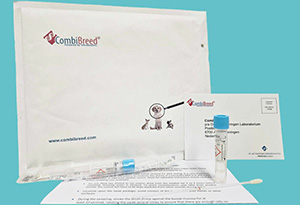
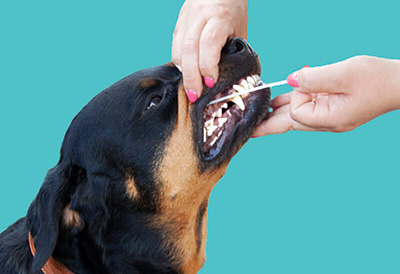
Suivez le guide étape par étape fourni dans notre kit de prélèvement, qui comprend 2 écouvillons. Il s’agit d’un processus rapide que vous pouvez effectuer à la maison. Emballez vos écouvillons en toute sécurité et envoyez-les à notre laboratoire. Veillez à ce que chaque prélèvement soit étiqueté avec le nom de votre chien et son numéro de puce ou d’enregistrement afin de garantir un traitement précis.

Analyse ADN

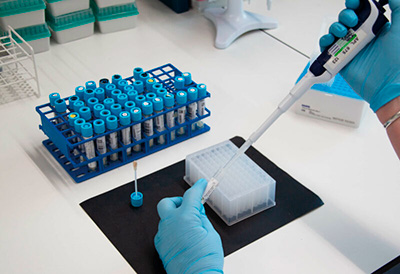
Nos experts traitent les données génétiques de votre chien avec le plus grand soin, en veillant à ce que chaque détail soit méticuleusement examiné. Nous allons plus loin pour garantir la fiabilité. Nos contrôles de qualité rigoureux sont conçus pour vous fournir des résultats fiables.

Résultats disponibles

Nous vous informerons par courrier électronique lorsque vos résultats seront prêts à être consultés sur le portail en ligne de CombiBreed. Une fois qu’au moins 50 % des résultats sont disponibles, vous pouvez vous connecter à votre compte pour accéder à vos informations précieuses en ligne. Une fois tous les tests terminés, vous recevrez par e-mail le rapport de santé complet de votre chien au format PDF.

Foire aux questions (FAQ)

Que signifie ‘Aucun résultat’?

Si un test donne ‘Aucun résultat’, nous ne pouvons pas générer un résultat fiable. Cependant, l’échantillon est de qualité suffisante pour générer un résultat fiable pour les autres tests. La fiabilité du test effectué est déterminée par des analyses répétées. Si les résultats diffèrent les uns des autres, nous ne pouvons pas rapporter un résultat fiable. Un ‘aucun résultat’ peut également se produire parce qu’un certain test n’obtient pas de résultat, alors que des tests effectués en parallèle fournissent un résultat fiable. Si vous désirez toujours un résultat pour ce test, vous pouvez le racheter dans notre boutique en ligne et envoyer un nouvel échantillon.

Je n’ai pas reçu les résultats de tous les tests ADN, mais le rapport a déjà été finalisé. Vais-je encore recevoir les résultats de ces tests en attente?

L’ensemble comprend plus de 290 tests ADN et il est possible que nous ne soyons pas en mesure de fournir des résultats pour chacun d’entre eux dans un premier temps. Dans les cas où aucun résultat n’est disponible, nous procéderons à un nouveau test pour nous assurer que nous pouvons fournir un résultat. Nous maintenons un taux de réussite de 95 % pour ce qui est de la remise du rapport final sur la santé.

Pourquoi dois-je envoyer deux écouvillons de mon chien?

Compte tenu de la gamme étendue de tests ADN inclus dans notre kit de santé CombiBreed pour chiens, nous avons besoin d’une plus grande quantité de matériel ADN que pour nos autres tests et kits. Il est donc nécessaire de renvoyer deux écouvillons contenant du matériel ADN. Lors de votre commande, vous recevrez un kit d’écouvillonnage comprenant deux écouvillons Copan et des instructions d’échantillonnage détaillées.

Comment saurai-je si j’ai recueilli suffisamment de matériel génétique pour l’analyse?

Même si vous ne voyez pas de matériel génétique visible sur les écouvillons, si vous avez suivi les instructions, vous avez probablement recueilli une quantité suffisante d’ADN. Notre laboratoire effectue des contrôles de qualité afin de garantir une quantité suffisante de matériel génétique pour l’analyse.

Le kit DNA Health convient-il aux chiots?

Oui, le paquet de santé CombiBreed pour chiens peut fournir des informations précieuses sur la santé et les risques potentiels des chiots, vous aidant ainsi à gérer leur bien-être.

Comment puis-je rester informé de l’état d’avancement de ma commande?

Vous recevrez des notifications par courrier électronique à des étapes clés du processus, par exemple lorsque vos échantillons sont reçus, lorsque les résultats sont prêts à être consultés et lorsque votre rapport de santé complet est disponible.

Puis-je utiliser le kit santé CombiBreed pour n’importe quelle race de chien?

Le kit de santé CombiBreed pour chiens est conçu pour couvrir toutes les races de chiens. Cela signifie que, quelle que soit la race de votre chien, vous pouvez bénéficier des informations génétiques complètes fournies par le kit. Vous obtiendrez des informations précieuses sur la santé de votre chien, les risques génétiques potentiels et d’autres caractéristiques pertinentes, quelle que soit sa race. Ce caractère inclusif fait du kit ADN santé une ressource polyvalente et précieuse pour tous les propriétaires de chiens.

Combien de temps dois-je attendre que mon chien ait mangé avant de prélever l’échantillon?

Il est recommandé d’attendre 1 à 2 heures après que votre chien ait mangé avant de prélever l’échantillon. Pendant ce temps, gardez-le à l’écart des autres animaux et ne lui donnez que de l’eau.

Le prélèvement d’ADN sur mon chien est-il sûr et indolore?

Oui, le prélèvement d’ADN à l’aide du kit de prélèvement est totalement sûr et indolore pour votre chien. Il s’agit d’un processus non invasif qui ne nécessite qu’un prélèvement de l’intérieur de la joue.

Puis-je prélever les échantillons moi-même ou ai-je besoin de l’aide d’un professionnel?

Vous pouvez facilement prélever les échantillons vous-même en suivant les instructions fournies dans le kit de prélèvement. Le processus est conçu pour une utilisation à domicile.

Puis-je communiquer les résultats de mon chien à mon vétérinaire?

Tout à fait ! Le partage des résultats génétiques de votre chien avec votre vétérinaire peut faciliter l’élaboration de plans de soins mieux adaptés. Pour ce faire, utilisez le rapport pdf contenant les résultats. Vous pouvez le communiquer à votre vétérinaire par courrier électronique ou sous forme imprimée.

Puis-je commander plusieurs paquets de santé ADN pour différents chiens?

Absolument ! Vous pouvez commander plusieurs kits de santé CombiBreed pour différents chiens et les gérer tous dans votre compte CombiBreed pour un accès pratique à leurs résultats respectifs. Ajoutez le pack à votre panier d’achat et gérez la quantité dans ce même panier.

Mes données et celles de mon chien sont-elles en sécurité avec CombiBreed?

Oui, nous prenons la confidentialité des données au sérieux. Vos informations personnelles et celles de votre chien sont traitées avec le plus haut niveau de confidentialité et de sécurité. Veuillez consulter notre politique de confidentialité pour plus de détails.

Comment recevrai-je les résultats de mes tests?

Une fois que nous aurons reçu vos échantillons et que nous les aurons analysés, nous vous avertirons par e-mail que vos résultats sont prêts. Connectez-vous à votre compte CombiBreed pour accéder à vos résultats sur le portail en ligne. Un rapport de santé complet vous sera envoyé par e-mail lorsque tous les tests demandés auront été effectués.

Quelles sont les précautions à prendre avant de collecter du matériel génétique?

Pour garantir la qualité des échantillons, il est recommandé de préparer votre chien 1 à 2 heures avant le prélèvement. Pendant cette période, gardez votre chien à l’écart des autres animaux et ne lui permettez pas de manger ou de boire, à l’exception de l’eau.

Comment puis-je savoir que vous avez reçu l’échantillon de mon chien?

Vous recevrez un courriel de confirmation une fois que nous aurons reçu l’échantillon de votre chien dans notre laboratoire. Cet e-mail vous donnera l’assurance que l’échantillon a bien été reçu.

Qu’entend-on par tests ADN adaptés à la race?

Tous les tests ADN ne sont pas adaptés à toutes les races. Les races pour lesquelles le test est adapté sont décrites sur la page produit de chaque test. Dans le rapport du CombiBreed Health Package for Dogs, nous distinguons également les tests pertinents pour la race et les autres tests en fonction des données que vous avez saisies lors de l’achat.

Comment accéder à votre portail en ligne?

Vous pouvez accéder à notre portail en ligne via votre compte dans notre boutique en ligne CombiBreed. Cliquez sur “Portail en ligne” dans le menu de votre compte personnel. La première fois, nous vous demandons de vous connecter à nouveau pour vérifier l’identité de l’utilisateur. La prochaine fois, vous pouvez cliquer directement sur le lien et vous arriverez immédiatement sur notre portail en ligne.

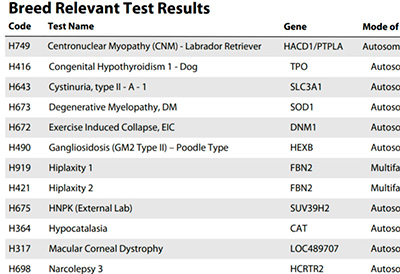
Pourquoi HNPK n’est-il pas inclus dans le paquet Santé?

Le test HNPK (Hereditary Nasal Parakeratosis) est breveté dans une grande partie de l’Europe. Par conséquent, nous ne sommes pas en mesure d’effectuer ce test dans l’un de nos laboratoires. Au lieu de cela, nous avons conclu un partenariat avec un laboratoire externe situé en dehors de la zone protégée par le brevet pour effectuer ce test. En raison des coûts relativement élevés associés à ce test, nous avons décidé de l’exclure de notre offre standard.

Si vous êtes intéressé par le test HNPK, vous pouvez le commander séparément en utilisant le code de test H675. Veuillez noter que le test HNPK reste disponible dans le cadre de nos forfaits CombiBreed spécifiques à une race.

Quelle est la différence entre les paquets CombiBreed spécifiques à une race et le paquet santé CombiBreed pour les chiens?

Les kits CombiBreed ont été conçus pour de nombreuses races de chiens. Les tests qu’ils contiennent sont tous adaptés à la race. Le pack “Santé” contient de nombreux tests pertinents pour les races courantes. Vous souhaitez uniquement connaître les conditions de santé génétiques de votre race ? Dans ce cas, nous vous conseillons d’acheter un kit spécifique à votre race.

Pourquoi devrais-je envisager un test ADN pour mon chien?

Les tests ADN peuvent révéler des informations cruciales sur la santé de votre chien, les traits spécifiques à sa race et les risques génétiques potentiels. Ces informations vous permettent de prendre des mesures proactives pour assurer le bien-être général et la longévité de votre chien.

Coat Colour W-Locus (Dominant White KIT gene)

Both Dominant White (DW) and White Spotting (Ws) are controlled by the KIT gene. Dominant White is also referred to as the W-locus, while White Spotting is known as the S-locus. The KIT gene has three variants (alleles), which means that both DW and Ws are included in this test. The DW allele is dominant over both the Ws and N (Normal) alleles, and the Ws allele is dominant over the N allele.

Progressive Retinal Atrophy (crd2-PRA) – American Pit Bull Terrier

Cone-Rod Dystrophy (CRD) is a disorder of the photoreceptor cells of the eye, which can lead to early-onset blindness in affected dogs. This variant of the disorder, Cone-Rod Dystrophy, Type 2 (crd2, or crd2-PRA) is found in the American Pit Bull Terrier. It is caused by a recessive mutation to the gene IQCB1. A similar variant of the disease, called crd1, occurs in the American Staffordshire Terrier.

Go to Top